

Correr no calor: como preparar-se para uma ultra no deserto
Um guia para correr com calor e preparar-se para uma ultra-maratona no deserto, como a Ultra X Marrocos ou a Ultra X Jordânia: aclimatação ao calor, hidratação, ritmo de corrida, equipamento e cuidados com os pés.
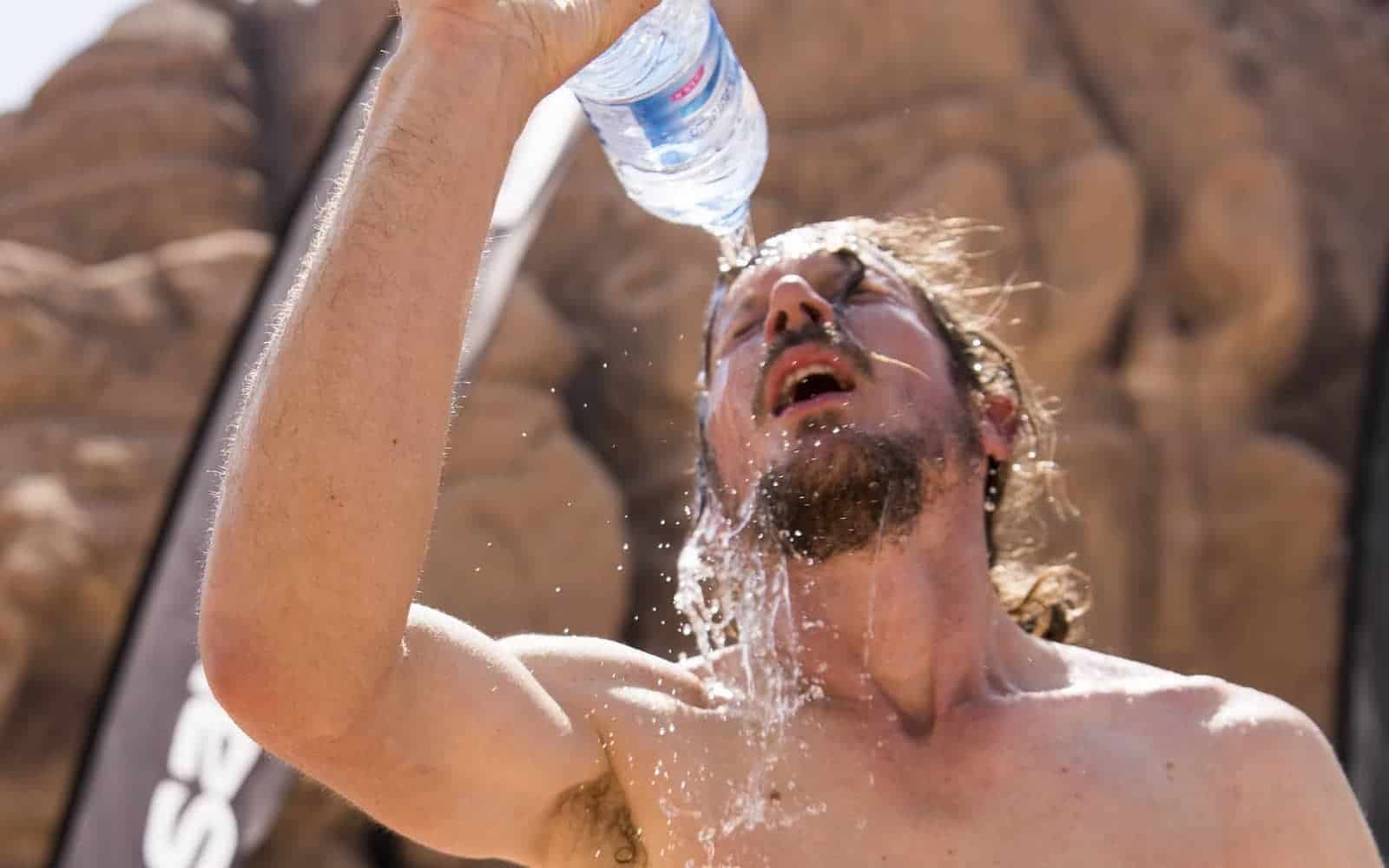
Running in the heat is not ordinary running with a nicer backdrop. In extreme heat, especially desert heat, the whole equation changes.
Heat raises perceived effort, increases cardiovascular strain, affects appetite, changes hydration needs and makes pacing mistakes more expensive. A pace that feels steady on a cool training run can feel completely different under a desert sun.
That does not mean desert ultras are only for hardened specialists. It does mean they need to be respected.
Good preparation is not about trying to suffer as much as possible before the race. It is about building fitness, adapting carefully to heat, testing kit, understanding hydration, learning how to eat when appetite drops, and pacing with enough humility to last.
Why does heat make running harder?
Heat makes running harder because your body is trying to do two jobs at once. It has to move you forward, and it has to stop you from overheating.
When you run, your muscles produce heat. To cool the body, blood flow to the skin increases and you sweat. In hot conditions, especially when shade is limited and the sun is strong, that cooling process becomes more demanding.
The result is usually a higher heart rate for the same pace, higher perceived effort and greater fluid loss. You may feel as though you have suddenly lost fitness. Usually, you have not. You are just paying the cost of the environment.
Humidity makes it harder still. When the air is already moist, sweat evaporates less efficiently, so the body’s main cooling mechanism works less well. That is why a humid 25 degrees can feel more punishing than a dry 30, and why runners coming from cool, damp climates often underestimate how much humidity adds to the strain.
This is why desert races should not be treated like ordinary trail races with a hot forecast. The heat is not a detail. It is part of the race.
What is a desert ultra?
A desert ultra is an ultra marathon held in desert or semi desert terrain. It may be single stage or multi-stage, supported or self sufficient, sandy or rocky, runnable or technical.
The common features are heat, exposure, strong sunlight, limited shade, dry air, variable ground and a greater need for self management.
Ultra X Morocco, for example, takes place in and around Ouarzazate, often described as the door of the desert. The routes include rocky trails, desert landscapes, oases and terrain at the edge of the Sahara. Ultra X Jordan takes place in Wadi Rum and includes a 220km multi-stage race as well as the 110km Jordan Challenge.
The details vary between races, but the basic demand is similar: move efficiently through a hot environment while managing effort, fluids, food, feet and judgement.
What is heat acclimatisation?
Heat acclimatisation (sometimes called heat acclimation) is the process by which the body adapts to repeated exercise in hot conditions.
With the right exposure, many athletes become better at tolerating heat. They may sweat more effectively, experience lower heart rate at a given workload, feel more comfortable in warm conditions and manage thermal strain better.
That does not make anyone immune to heat. It just improves the odds.
Sports science guidance commonly recommends repeated heat exposure over one to two weeks before competing in hot conditions. Some approaches use around 7 to 14 days. The right method depends on the runner, the event, the environment, health status and experience.
The main point is that heat acclimatisation should be planned. It should not be a panic move in race week.
How should you acclimatise to heat?
Carefully. Heat training adds stress. Hard training adds stress. Life adds stress. If you stack all of that together without thinking, you can arrive at the race tired rather than prepared.
A sensible approach may include easy running in warmer conditions, controlled treadmill sessions in a warm room, or sauna exposure after easy training. The aim is to expose the body to heat without turning every session into a test of toughness. For many runners, the safest pattern is to:
- Build fitness first
- Add heat gradually
- Keep heat sessions mostly easy
- Monitor recovery
- Avoid heat exposure when ill
- Back off if sleep, mood or performance drops
- Seek medical advice if there are any health concerns
Heat training should make you more robust. If it is making you exhausted, it is probably not doing its job.
Can you prepare for a desert ultra in the UK?
Yes, but you need to be honest about what you can and cannot replicate. Most UK runners cannot fully mimic desert conditions at home. That is fine. You can still prepare properly.
You can build endurance. You can practise back to back days. You can test shoes and socks. You can train on trails, gravel, sand and uneven ground where available. You can practise with race kit. You can learn how to eat while moving. You can include controlled heat exposure in the final weeks.
The goal is not to create a fake Sahara in the gym. The goal is to reduce unknowns.
This is also where shorter desert formats can be useful. An event such as Ultra X Morocco can give runners experience of heat, desert terrain and stage racing without immediately committing to a full week long desert race. Experience matters. You do not need all of it at once.
How should you train for a desert ultra?
Start with the basics. Consistent running matters more than occasional extreme sessions. The body needs time to adapt to long distance work, especially if the race is multi-stage. A good plan should include steady mileage, long runs, strength work, terrain practice and recovery, and for multi-stage races, back to back days that teach you how to move on tired legs. For a full structured build, see the Ultra X Training Xone or this article. Useful training includes:
- Long easy trail runs
- Back to back weekend sessions
- Caminhadas com um objetivo específico
- Running on uneven or sandy terrain where possible
- Treino de força para panturrilhas, quadríceps, glúteos, isquiotibiais e tronco
- Treinar com o equipamento de corrida
- Controlled heat exposure in the final weeks
- Nutrition practice during long runs
The aim is to become durable. Fitness matters, but durability is what keeps you moving when the race stops feeling tidy.
How should you pace in extreme heat?
Pace by effort, not by ego. In the heat, your usual pace may not be relevant. Trying to force it can raise heart rate, increase body temperature, damage appetite and accelerate dehydration.
A good desert pacing strategy is usually conservative from the start. Hike earlier than you think. Keep climbs controlled. Avoid racing people in the opening miles. Protect your ability to eat and drink. This is especially important in multi-stage events, where a bad first day can make every other day harder.
In hot races, restraint is not weakness. It is risk management.
How much should you drink?
There is no single number that works for everyone. Sweat rate varies between runners. It depends on body size, pace, temperature, humidity, clothing, acclimatisation and individual physiology. Some people also lose more sodium in sweat than others.
The aim is to avoid both significant dehydration and over drinking. Under drinking can increase strain and worsen heat stress. Over drinking plain water can also be dangerous because it may contribute to low blood sodium, a condition known as hyponatraemia.
The practical answer is to test your hydration plan in training. Weighing before and after long runs can help estimate sweat loss. You should also pay attention to thirst, urine colour, salt marks on clothing, stomach comfort, headaches, energy and mood. During the race, follow event guidance and use electrolytes if they are part of your tested plan. Do not make dramatic changes based on guesswork.
What should you eat in the heat?
Eating in the heat can be surprisingly difficult. Appetite often drops. Sweet foods can become less appealing. The stomach may feel unsettled. The problem is that under fuelling makes everything harder: running, decision making, temperature regulation, mood and recovery.
A desert ultra nutrition plan should be practised before race day. Many runners do well with a mixture of carbohydrates, salty snacks, simple foods and liquid calories. Variety becomes more important the longer the race goes on. The basics are to:
- Come cedo
- Eat small amounts often
- Utilize alimentos que já tenha experimentado
- Include savoury options
- Not rely on one product
- Recupere-se adequadamente após cada etapa
If you cannot eat while running, eat while walking. In desert racing, walking well and eating enough is often far better than running badly and slowly falling apart.
What kit matters most?
Desert kit should help you manage heat, sunlight, friction and terrain. The exact kit list will depend on the race, but runners should think carefully about:
- Lightweight technical clothing
- A cap or desert hat
- Sunglasses
- Sun cream
- A buff or neck covering
- Shoes with enough room for swelling feet
- Socks that manage heat and friction
- Gaiters if the route includes sand
- A race vest that does not rub
- Reliable bottles or soft flasks
- Electrolytes
- A foot care kit
- A head torch if required
- Emergency layers where required
The rule is simple: test everything. Kit that feels fine for an hour may not feel fine after two hot stages with swollen feet and sand in your shoes.
Should you wear gaiters?
Possibly. Gaiters can be useful if the race includes sand, grit or fine debris. They can reduce the amount of material getting into your shoes, which may help reduce friction and blisters.
They are not automatically necessary for every desert race, and poorly fitted gaiters can create their own problems. If you plan to use them, train in them. Do not make race day the first test.
How do you protect your feet?
Foot care is one of the biggest parts of desert ultra preparation. Heat can make feet swell. Sand and grit increase friction. Long hours on uneven ground create pressure points. A small hot spot can become a serious problem if ignored.
Good preparation means testing shoes and socks, understanding whether your feet swell, learning where you blister, practising taping if needed and carrying suitable foot care supplies. In a multi-stage race, foot care should become a daily routine:
- Remove sand and debris
- Dry the feet
- Check for hot spots
- Treat small problems early
- Prepare socks and shoes for the next stage
Do not ignore a hot spot and hope it goes away. It usually does not.
How should you recover during a multi-stage desert ultra?
Recovery is part of the race. After each stage, the priorities are simple:
- Cool down safely
- Rehydrate
- Eat
- Address foot issues
- Change into dry clothing
- Organise kit
- Rest
- Prepare for the next day
The runners who perform well across several days are often not the ones who do something spectacular. They are the ones who do the basics well every afternoon and evening. A good camp routine saves energy. A chaotic one spends it.
What are the warning signs of heat illness?
Heat illness needs to be taken seriously. Warning signs may include dizziness, confusion, nausea, headache, unusual fatigue, poor coordination, chills, collapse, disorientation or feeling excessively hot. A runner who is confused, behaving unusually or unable to continue safely needs urgent help.
If symptoms develop, slow down, stop if necessary, seek shade where possible, cool the body and speak to the medical team. Ignoring heat illness is not toughness. It is poor judgement. In hot environments, good judgement is part of endurance.
What are the most common desert ultra mistakes?
The common mistakes are predictable, which means most are avoidable.
- Começar demasiado depressa
- Underestimating the heat
- Trying new kit on race day
- Drinking without a plan
- Ignoring electrolytes
- Relying only on sweet food
- Failing to protect the neck, face and eyes
- Letting sand sit in the shoes
- Ignoring hot spots
- Standing around in the sun at checkpoints
- Not eating enough after each stage
- Treating a desert race like a normal trail race
Desert ultras do not require perfection. They do require attention.
Final thoughts
A desert ultra is a running challenge, but it is also a self management challenge. The runners who do well are not always the fastest. They are often the ones who pace conservatively, eat early, drink intelligently, protect their feet, manage heat exposure and solve small problems before they grow.
Desert running can be extraordinary. The landscapes, light, scale and silence are part of what make these events memorable. But the environment deserves respect. Prepare properly, and the race becomes more than a survival exercise. It becomes a real adventure.
Where to put this into practice
Reading about heat is one thing. Racing in it is another. If you want to put this preparation to use, Ultra X runs two desert ultras built for exactly that: Ultra X Morocco, around Ouarzazate at the edge of the Sahara, and Ultra X Jordan, through the desert of Wadi Rum, with a 220km multi-stage race alongside the shorter 110km Jordan Challenge. Both are supported ways to gain real desert and heat experience.
Perguntas frequentes
Why is running harder in the heat? In the heat your body has to cool itself as well as move you forward, so it sends more blood to the skin and sweats more. That usually means a higher heart rate and higher perceived effort at the same pace. Humidity makes it worse, because sweat evaporates less efficiently.
Does heat affect your running pace? Yes. The same effort produces a slower pace in the heat. This is why you should pace by effort rather than by your usual splits, especially early in a race.
How long does heat acclimatisation take? Many approaches use repeated heat exposure over around one to two weeks. Some protocols use 7 to 14 days. The right approach depends on the runner, the race and the level of supervision available.
Can I do heat training in a sauna? Some runners use sauna exposure as part of heat preparation. It should be introduced gradually and carefully, usually after easy training rather than before hard sessions. Anyone with medical concerns should seek professional advice first.
How much should you drink when running in the heat? There is no single number. Sweat rate varies between runners, so test your hydration plan in training. Avoid both significant dehydration and over drinking plain water, which can dangerously lower blood sodium.
Do I need electrolytes? Many runners use electrolytes in hot races because sweat contains sodium. The amount required varies between individuals, so test your approach in training.
What are the warning signs of heat illness? Dizziness, confusion, nausea, headache, unusual fatigue, poor coordination, chills or collapse. A runner who is confused or unable to continue safely needs urgent help. Slow down, seek shade, cool the body and speak to the medical team.
Can you prepare for a desert ultra in the UK? Yes, within limits. You cannot fully recreate desert conditions, but you can build endurance, practise back to back days, test kit and nutrition, and add controlled heat exposure in the final weeks. Racing a shorter desert event first also helps.
Are desert ultras only for experienced runners? Some are designed for experienced runners. Others offer shorter or supported formats that may suit less experienced runners who prepare properly. Consider the format, distance, terrain and heat risk carefully.
What is the biggest mistake in a desert ultra? Usually starting too hard. Heat makes early pacing errors more costly, and problems can escalate quickly if eating, drinking and cooling are not managed from the start.