

Multi-Stage vs Single-Stage Ultra Marathon: Which Is Right for You?
Combien de temps faut-il pour courir un ultramarathon ? Nous détaillons tout ce qu'il faut savoir sur la course d'un ultramarathon, l'entraînement, la distance, le terrain et la technique.
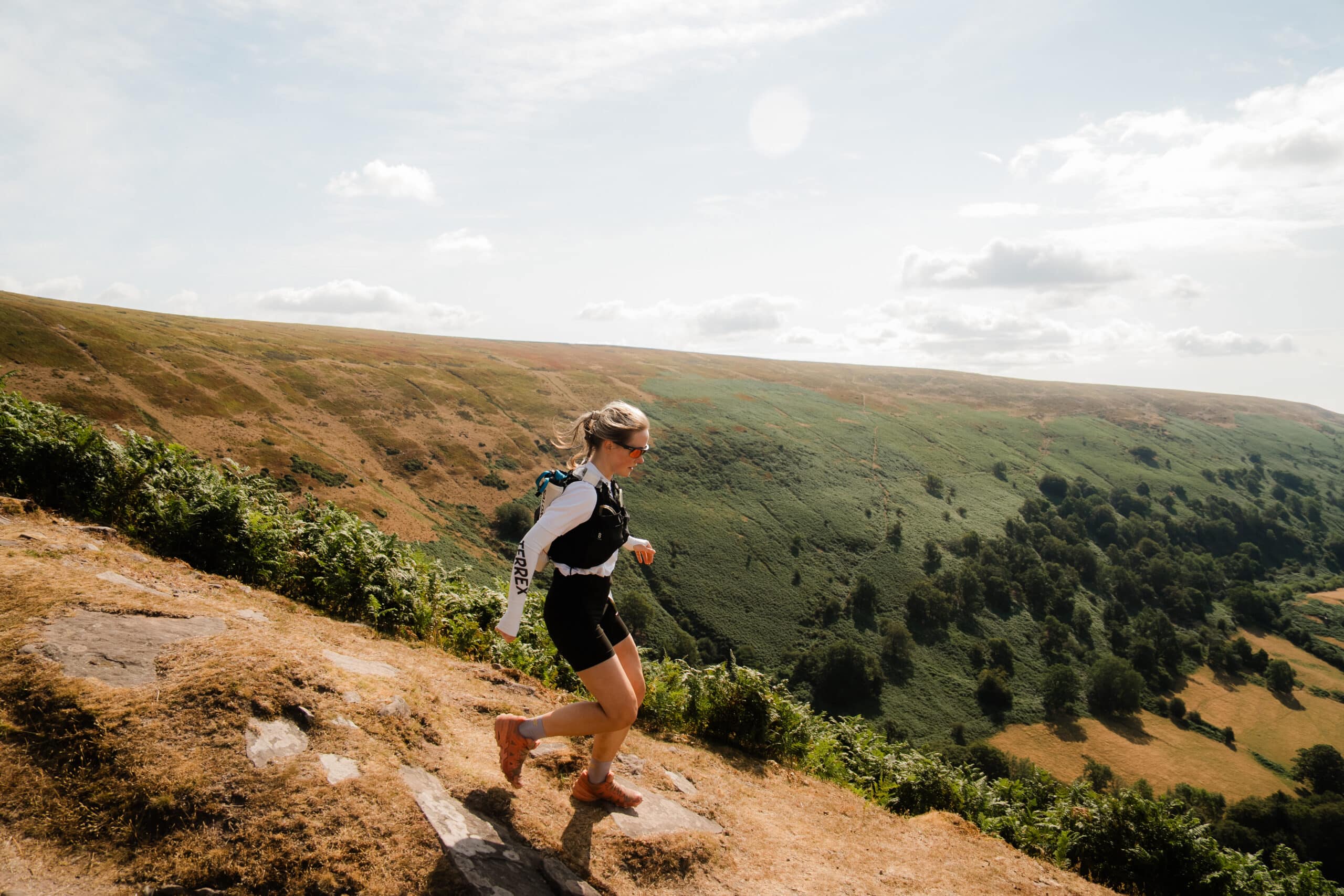
Multi-Stage vs Single-Stage Ultra Marathon: Which Is Right for You?
Some ultra marathons are completed in one continuous push. Others are split across several days.
That sounds like a simple difference, but it changes almost everything: how you train, how you pace, how you recover, what you carry, what goes wrong, and what the race feels like.
A multi-stage ultra is not just a single-stage ultra with sleep added in. A single-stage ultra is not automatically the purer or harder version. They are different formats, and they test different skills. The right one depends on the runner.
What is a multi-stage ultra marathon?
A multi-stage ultra marathon is an event where the total distance is split across separate days. Runners complete a stage, stop for the day, recover overnight and start again the next morning.
The format varies a lot. Some events are highly supported, with race camps, medical teams, checkpoints, luggage transport and meals. Others are much more self sufficient, with runners carrying most of what they need. The common feature is the daily rhythm. Start. Run. Finish. Recover. Repeat.
Ultra X is best known for this kind of racing. Ultra X Jordan and Ultra X Kenya use the multi-stage format to let runners cover a significant distance through distinctive landscapes while keeping a clear structure to each day. The most famous multi-stage race of all is the Marathon des Sables in the Sahara, and in the UK the Dragon’s Back Race a six day mountain race through Wales, is a classic example of the format. That structure does not make a race easy. It just changes the nature of the difficulty.
What is a single-stage ultra marathon?
A single-stage ultra marathon is completed as one continuous effort. The clock starts at the beginning and keeps running until the runner finishes, withdraws or is timed out.
This category is broad. A 50km trail race and a 300km continuous race are both single-stage ultras, but the experiences are completely different. The Northern Traverse, a 300km coast to coast crossing of northern England that runs non-stop from St Bees to Robin Hood’s Bay, is a good example of a long single-stage race.
The defining feature is that there is no formal overnight reset. Runners have to manage pace, food, fluids, clothing, foot care, navigation, sleep and fatigue while the event continues. In longer single-stage races, sleep becomes part of the strategy. Some runners take short rests. Others push through. Either way, the clock does not stop. That creates a particular kind of pressure.
Multi-stage vs single-stage, at a glance:
| Aspect | Multi-stage ultra | Single-stage ultra |
| The race | Distance split across separate days, with overnight recovery | One continuous effort, the clock never stops |
| What it tests | Repeated execution: recovery and consistency day after day | Continuous execution: pacing and problem solving in one push |
| The hard part | Waking up and racing again on tired legs | Fixing problems while still moving, and sleep loss in long races |
| Sleep | A defined overnight rest between stages | Self-managed, and part of the strategy in long races |
| Kit | Race kit plus camp kit, so organisation matters | Carried kit must cover the whole effort, so reliability matters |
| The experience | Camp life, community and a journey through a place | An unbroken line from start to finish |
| An Ultra X example | Dragon’s Back Race; Ultra X Jordan | Northern Traverse |
| A good first ultra? | Yes, a supported one such as Ultra X England | Yes, a shorter one such as a 50km or 50 mile race |
Which format is harder?
Neither format is automatically harder.
A single-stage ultra often feels more immediate. Fatigue builds without a clean break. If you get cold, stop eating, damage your feet or make a pacing error, you have to solve that problem while the race continues. In longer events, sleep deprivation can affect judgement, mood and movement.
A multi-stage ultra is more cumulative. You may get to sleep, but you have to wake up and race again. Sore legs, blisters, dehydration and low energy do not vanish overnight. They follow you into the next stage.
A simple way to think about it is this:
- Single-stage racing tests continuous execution
- Multi-stage racing tests repeated execution
Both are hard. They just reveal weakness in different ways.
Is a multi-stage ultra easier because you get to sleep?
Not necessarily. Sleep helps, of course. So does a defined finish each day. But a multi-stage race can wear runners down in a slower, more cumulative way.
The hardest moment is not always during the stage itself. Sometimes it is the next morning, when the legs are heavy, the feet are sore and the idea of starting again is much less romantic than it was when you entered.
The daily structure gives runners a chance to reset. It does not guarantee recovery. If you pace day one badly, under eat, neglect your feet or spend hours on your feet in camp, you can make the following days much harder. In a multi-stage race, the hours after finishing matter almost as much as the hours spent racing.
Is a single-stage ultra more pure?
Some runners like to think so. That is fine as a personal preference, but it is not a rule.
There is something clean and compelling about a single continuous line from start to finish. Start the race, keep going, finish the race. No second start line. No overnight pause. No chance to mentally park the problem until tomorrow.
But that does not make multi-stage racing a lesser version of ultra running. It is a different discipline. The ability to run, recover, organise yourself and repeat the effort is a real endurance skill. The better question is not which format is more legitimate. It is which type of difficulty you want.
Why choose a multi-stage ultra?
A multi-stage ultra is a strong choice if you want a challenge that feels like a journey as much as a race. The format works particularly well in places where the landscape is a major part of the experience. Deserts, mountains, islands, forests and remote trails all suit the rhythm of moving through a place over several days.
There is also a social side to multi-stage racing that is harder to recreate in a single-stage event. Runners finish the stage, return to camp, eat, compare stories, sort kit and prepare for the next day. You get to know people in a way that is different from lining up, racing and going home. Ultra X events are built around that idea: the race matters, but so does the camp, the crew, the shared fatigue and the feeling of going through something together. A multi-stage ultra may suit you if:
- You are motivated by adventure and place
- You like the idea of racing over several days
- You want a structured step up from marathon, 50km or 100km running
- You enjoy the community side of events
- You are willing to focus on recovery as much as running
- You want to learn how your body responds to repeated long efforts
It is not a soft option. But for many runners, it is a brilliant way to take on something bigger.
Why choose a single-stage ultra?
A single-stage ultra is a strong choice if you want one continuous test. The format is simple. The execution is not.
Single-stage racing rewards patience, pacing and problem solving. You have to deal with the race as it unfolds. If things go wrong, and at some point they probably will, you cannot wait until the end of the stage to fix them. You have to fix them while still moving. A single-stage ultra may suit you if:
- You like continuous endurance challenges
- You are comfortable moving through the night
- You want to test your pacing
- You prefer simple race formats
- You have experience with long trail events
- You are preparing for 100 mile or longer races
The appeal is the unbroken line. There is something powerful about starting a race and knowing that every step from that moment either helps or hurts the finish.
Which format is better for a first ultra?
It depends on the race. A 50km or 50 mile single-stage event can be an excellent first ultra for someone with marathon experience and a sensible training plan.
A supported multi-stage race can also be a good first major ultra, particularly for runners drawn to travel, community and adventure. The format gives structure, but still asks plenty from the runner. This is one reason events such as Ultra X England, Ultra X Morocco and the 110km Jordan Challenge can be good stepping stones. They offer a serious endurance challenge with a clearer framework than a long continuous race through multiple nights.
That said, not every multi-stage event is beginner friendly. A six day mountain race with huge ascent is a very different proposition from a supported two day desert race. The right question is not “single-stage or multi-stage?” It is “is this event appropriate for my experience, skills and preparation?”
How does the training differ?
Both formats require consistent endurance training. The difference is emphasis, and a full plan for either is covered in our our Training Zone. For single-stage ultras, useful training includes:
- Long continuous efforts
- Pacing practice
- Eating while moving
- Night running if the race requires it
- Time on similar terrain
- Learning to solve problems during long runs
For multi-stage ultras, useful training includes:
- Back to back days
- Running or hiking on tired legs
- Practising recovery between sessions
- Foot care routines
- Kit organisation
- Eating enough across repeated days
The most useful training is specific, but not reckless. You do not need to replicate the race in training. You need to prepare the systems the race will test.
What skills matter most in single-stage racing?
The key skills are pacing, fuelling, emotional control and problem solving. Most long single-stage races involve low points. Some feel quite final at the time. Often they are not. Food, warmth, slower movement, a change of socks or a short rest can transform the race.
Good single-stage runners tend not to panic. They identify the problem, make a decision and keep moving. They also understand that the race cannot be completed in the first section, but it can be damaged there.
What skills matter most in multi-stage racing?
The key skills are restraint, recovery and repeatability. A multi-stage race punishes runners who treat each day as if it exists in isolation. You need to finish today in a way that lets you start tomorrow.
That means eating after the stage, rehydrating, dealing with feet, changing into dry clothes, preparing kit, staying warm and resting where possible. The best multi-stage runners are often methodical. They do the obvious things well, every day, even when tired. It is not glamorous. It works.
What about kit?
Kit depends on the event, but the format changes the way you think. In a single-stage ultra, carried kit has to cover the conditions you may face during one continuous effort. Weight matters, but reliability matters more.
In a multi-stage ultra, you may have race kit and camp kit. Organisation becomes more important. You need to know where everything is, what you need each day, and how to keep important items dry, clean and easy to access. In both formats, the rule is the same: test everything before race day.
How should you choose?
Start with the experience you actually want.
Choose a multi-stage ultra if you want a multi-day journey, a clear daily rhythm, camp life, repeated effort and a strong sense of shared experience. Choose a single-stage ultra if you want one continuous challenge, simple rules, long uninterrupted movement and the psychological test of keeping going without a daily reset.
Do not choose either just because it sounds more impressive. Choose the one that excites you enough to train properly.
Conclusion
Ultra running is not one thing. It includes fast 50km trail races, 100 milers, desert stage races, mountain journeys, 300km crossings and everything in between. That variety is part of what makes the sport interesting.
Multi-stage and single-stage races are both valid, difficult and rewarding. They simply ask different questions. If the idea of waking up in camp and starting again excites you, consider a multi-stage race. If the idea of one continuous line from start to finish excites you, consider a single-stage race. Either way, prepare properly. The race will know if you have not.
Where to start with Ultra X
If you want to put this into practice, the Ultra X race series spans both formats and a range of difficulty. Ultra X Scotland, Ultra X Wales and Ultra X England offer multi-stage racing closer to home, while Ultra X Morocco and Ultra X Jordan take the format into the desert. For a flagship single-stage challenge, the Northern Traverse crosses northern England in one continuous push, and for multi-stage mountain racing the Dragon’s Back Race runs the length of Wales over six days.
Foire aux questions
What is the difference between multi-stage and single-stage ultra marathons? A multi-stage ultra is split into separate daily stages, with overnight recovery between them. A single-stage ultra is completed as one continuous effort, with the clock running from start to finish.
What is a stage race? A stage race is an event where the total distance is divided into separate stages, usually one per day, with results added together across the days. Most multi-stage ultras are stage races.
Is a multi-day ultra easier than a single-stage one? Not automatically. A multi-day ultra allows overnight recovery, but it requires repeated long efforts and good recovery habits across several days. A single-stage ultra is more immediate but never resets.
How many days is a multi-stage ultra? It varies by event. Many run over two to six days. Ultra X events are typically multi-day, and the Dragon’s Back Race runs over six days.
Is a single-stage ultra harder? It can be, especially over longer distances where sleep deprivation becomes a factor. But difficulty depends on distance, terrain, weather, cut offs and support, not the format alone.
Which is better for a first ultra? A shorter single-stage ultra (50km or 50 mile) or a suitable supported multi-stage race can both work well. The key is choosing an event that matches your experience, not the format label.
How do I choose between a multi-stage and single-stage ultra? Start with the experience you want. Choose multi-stage for a multi-day journey, camp life and repeated effort. Choose single-stage for one continuous test with no daily reset. Then check the specific event suits your experience.
How do I train for a multi-stage ultra? Use back to back training days, practise recovery, test your kit and nutrition, and learn to move efficiently on tired legs.
How do I train for a single-stage ultra? Build long continuous efforts, practise pacing, test nutrition, spend time on similar terrain and include night running if the race requires it.